Current Site
The Importance of Warming Up Before Training and Stretching Afterward
At our studio, our goal is to help each member train safely, effectively, and with long-term wellbeing in mind. One of the most powerful ways to support your body and get MORE out of every session is to include a proper warm-up before you begin and a dedicated stretch afterward.
These essential habits improve performance, protect your body, and support recovery.
What Is a Warm-Up?
A warm-up is a short series of movements performed *before* training to prepare your muscles, joints, and mind for safe and effective training.
It gently elevates your heart rate, activates your muscles, and wakes up your nervous system.
A proper warm-up usually includes:
Why Warming Up really Matters no matter which class you are attending:
* Increases blood flow and raises body temperature
* Activates the muscles you need for the training ahead
* Improves coordination, mobility, and performance
* Reduces the risk of strains, pulls, or other injuries (extremely important specially for the strength classes)
This is also the reason why we appreciate your punctuality to our classes: we care about your body and how to prepare it for a great workout.
Now that we understood the importance of warming-up, what about stretching?
What Is Stretching?
Stretching is the act of lengthening your muscles to improve flexibility and release tension.
Unlike warm-ups, stretching is typically slow, still, and held for longer periods, especially after training.
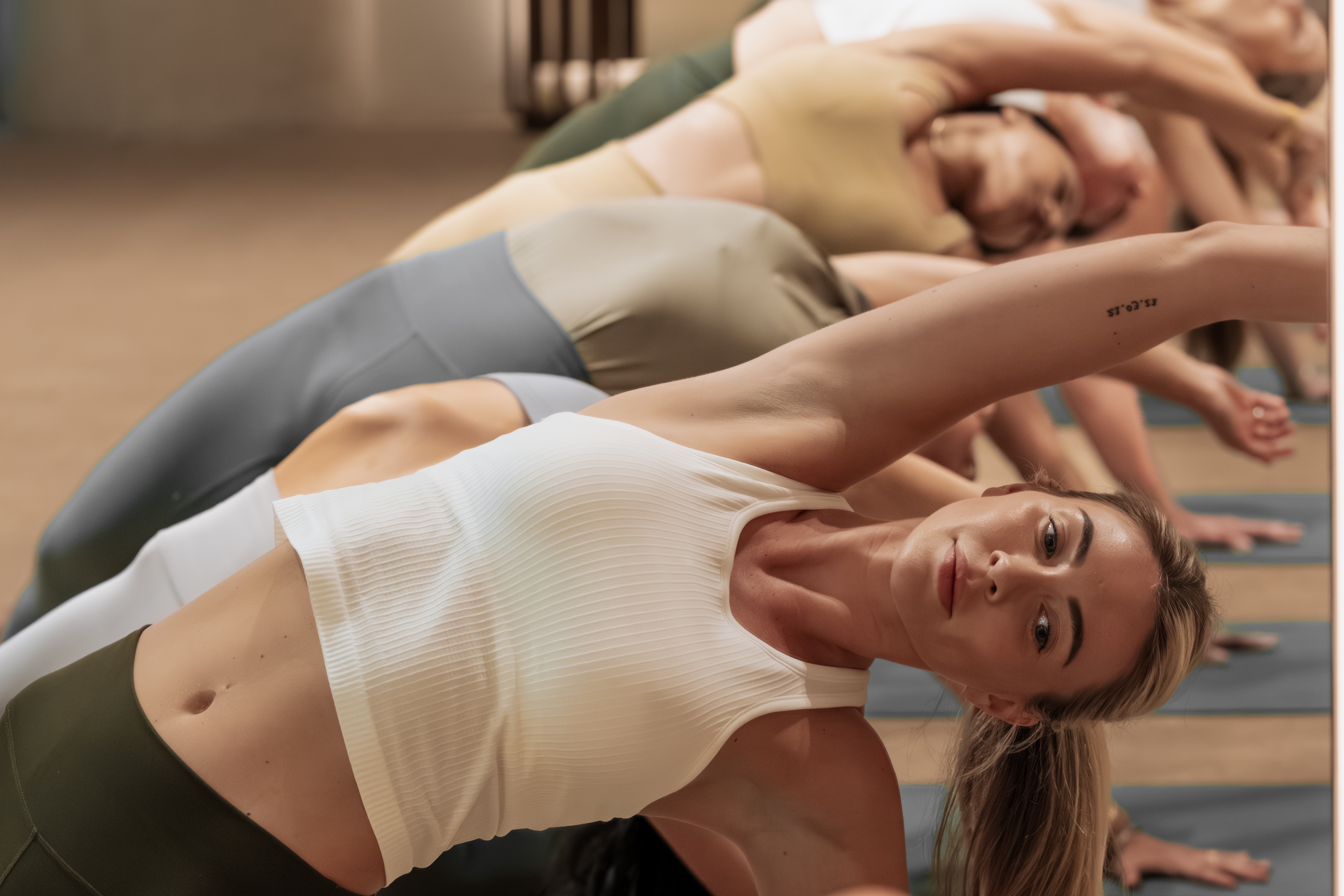
After a workout, stretching helps your body cool down, loosen tight muscles, increase flexibility, restore balance, and support recovery (recover faster).
Common forms of post-training stretching:
Why Stretching After Training Is Essential?
* Reduces muscle soreness and stiffness
* Improves range of motion and posture
* Encourages relaxation and stress relief
* Helps prevent long-term tightness and imbalances
Just a few minutes at the end of class can make your next session and your everyday movement feel so much better.
Deep Stretch Classes: Extra Support Where You Need It Most
To help our members go even further in mobility and recovery, our studio offers full body Deep Stretch classes focused on the tightest, most stressed areas of the body:
hips, lower back, shoulders, and neck.
These classes are especially helpful for:
Deep Stretch sessions use long holds, mindful breathing, and slow, intentional movements to release deep layers of tension that regular training doesn’t always address.
Small Habits, Big Results
Warm-ups, cool-down stretches, and dedicated mobility classes may seem simple, but they have a major impact on how your body feels and performs. They reduce injury risk, improve technique, support recovery, and help you progress safely and consistently.
At our studio, we're here to support your body in every stage of your training—from preparation to performance to recovery.
Written by: Edvige Picci